Cream cheese whipped cream sits between ordinary whipped cream and rich cream cheese frosting. It has the light texture of whipped cream, a gentle tang, and enough body for simple swirls on cupcakes, pie, shortcake, or pound cake. The method takes about 10 minutes and uses one mixing bowl.
The order matters more than the mixer speed. Beat the cream cheese completely smooth first, then add the cold cream in a slow stream. That gradual start prevents small cream cheese lumps and gives the mixture time to become evenly creamy before it traps air.
Why this method works
- The cream cheese starts smooth. Powdered sugar and vanilla loosen the cream cheese before cold cream enters the bowl, so there are fewer lumps to chase later.
- The cream goes in gradually. A small first addition blends into the thicker base. The remaining cream can then be poured in steadily without leaving streaks of cream cheese around the bowl.
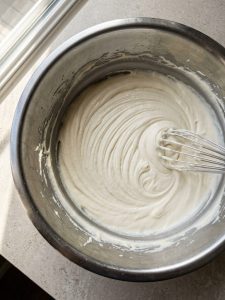
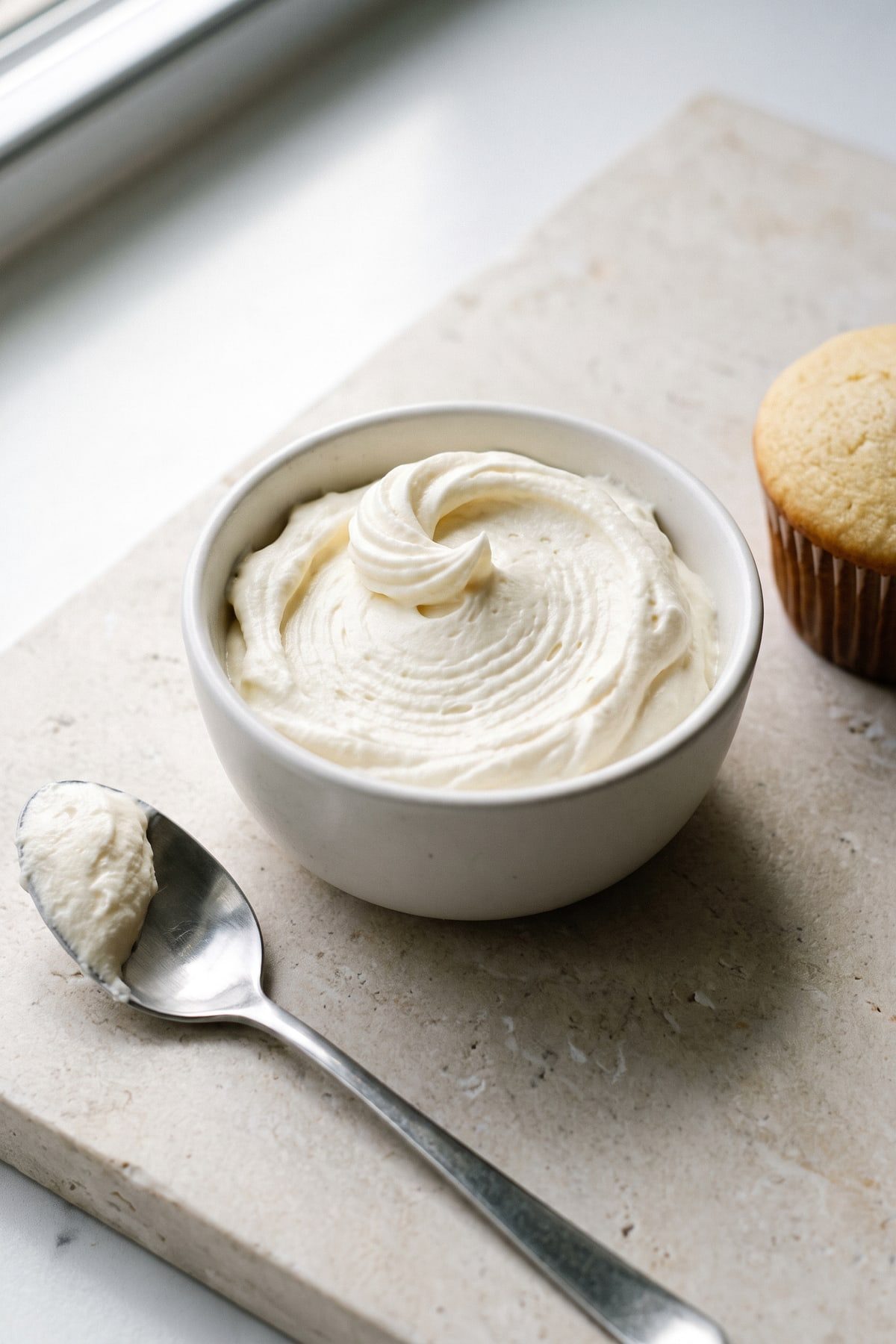
- The final cue is visible. Stop when a lifted whisk leaves a peak that stands upright with a slight curl at the tip. Mixing beyond that point can make the cream look grainy.
Ingredients
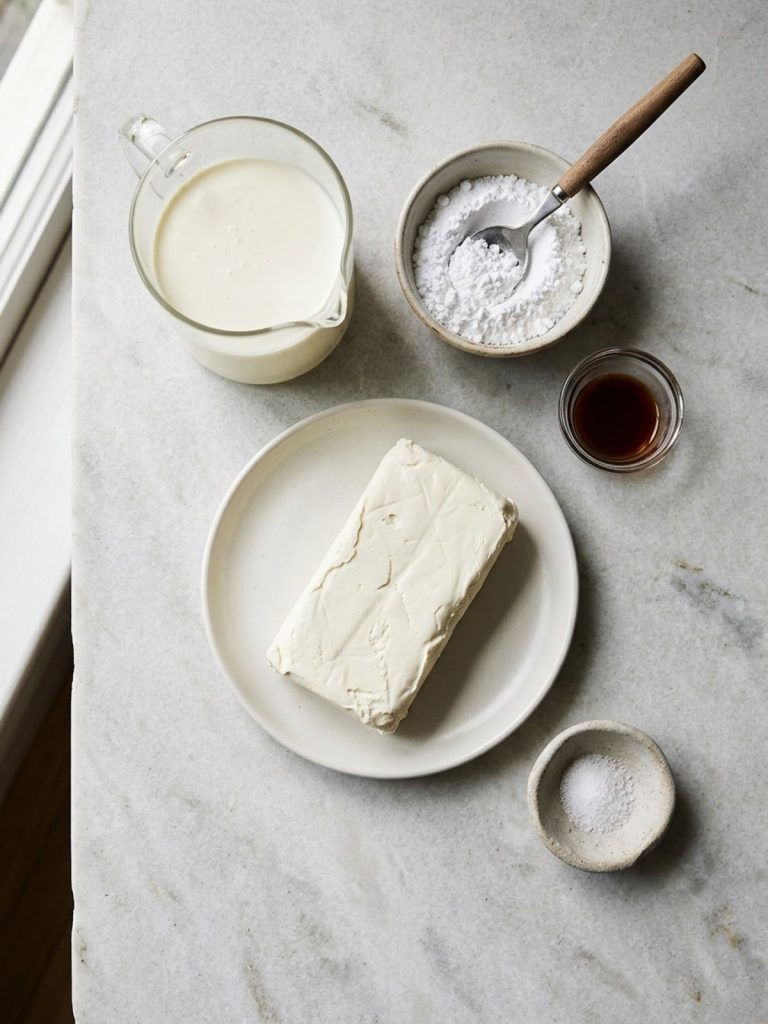
- Full-fat brick cream cheese: Use 4 ounces (113 g). Let it sit just long enough to become cool and pliable, then beat it before adding any cream. Tub-style spread contains more moisture and can produce a softer result.
- Confectioners’ sugar: One-quarter cup (30 g) sweetens the cream and dissolves quickly. Sift it if it has firm lumps.
- Vanilla and salt: One teaspoon vanilla rounds out the dairy flavor. A small pinch of fine salt keeps the sweetness from tasting flat.
- Heavy whipping cream: Keep 1 cup (240 ml) cold until it is time to pour. Heavy cream gives the mixture the fat it needs to whip and hold its shape.
How to make cream cheese whipped cream
1. Smooth the cream cheese
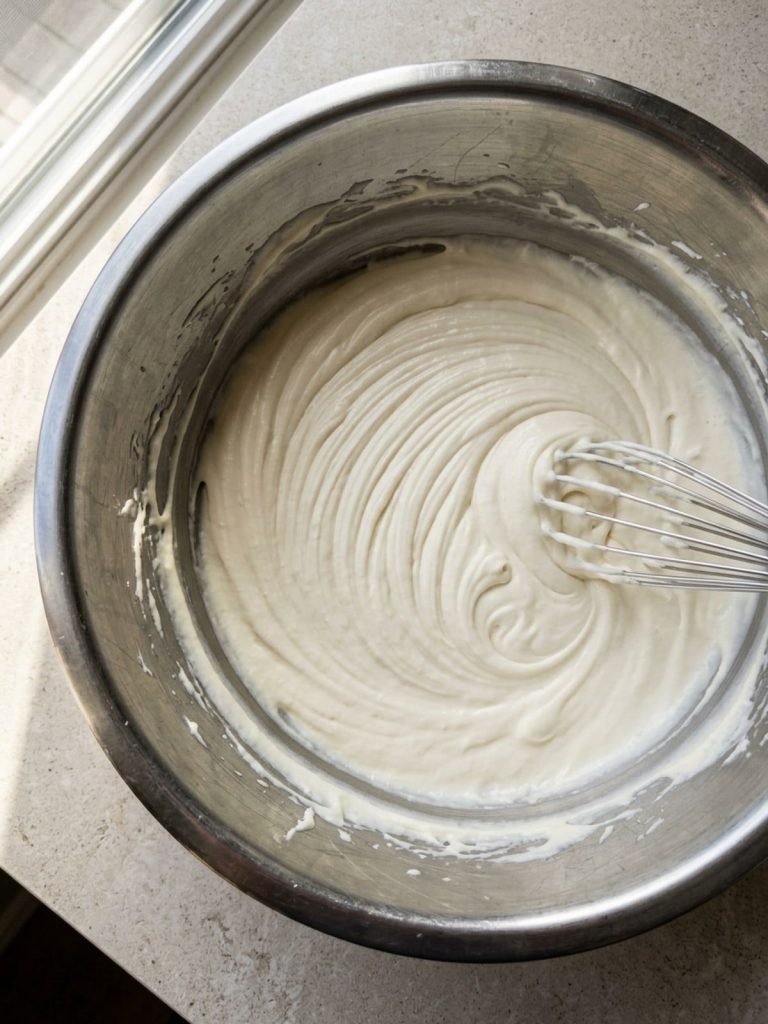
Place the cream cheese, confectioners’ sugar, vanilla, and salt in a large mixing bowl. Beat on medium-low speed until no visible cream cheese flecks remain. Stop once to scrape the bottom, sides, and beater; a hidden lump at this stage will still be there after the cream is whipped.
2. Add a small amount of cream
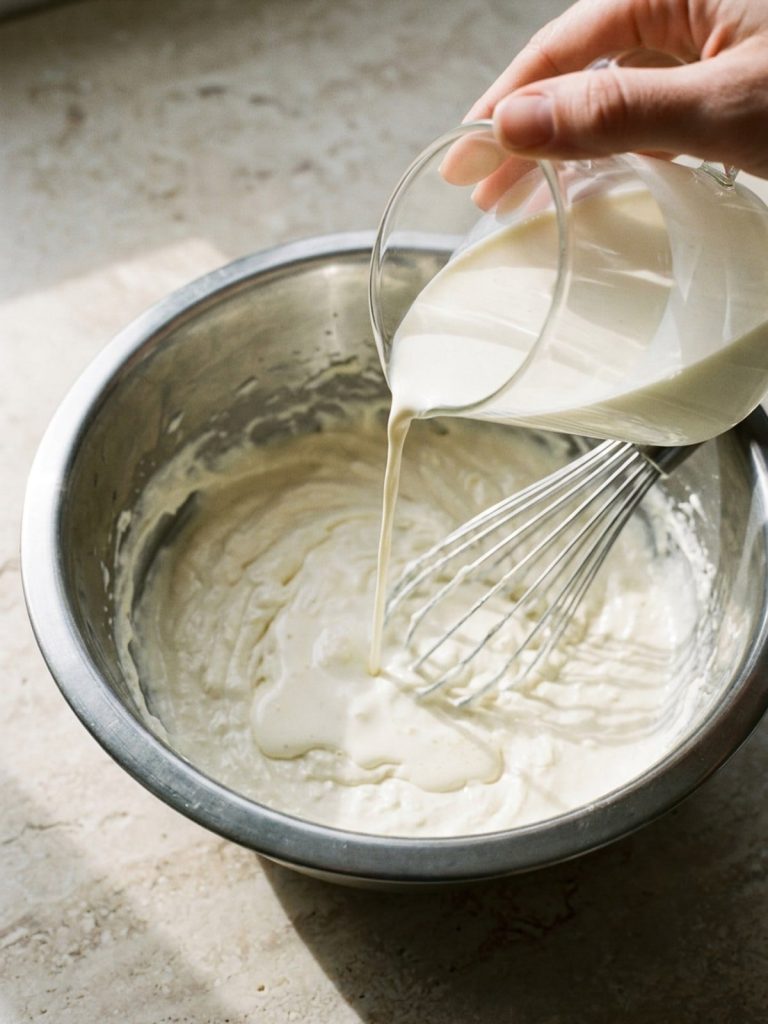
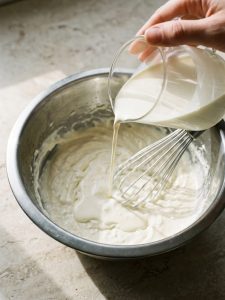
With the mixer on low, pour in about one-quarter of the cold heavy cream. Mix until the base loosens and looks completely uniform. Scrape the bowl again. This first addition is the useful checkpoint: the mixture should be smooth before the rest of the cream goes in.
3. Stream in the remaining cream
Pour in the rest of the cold cream slowly while the mixer runs on medium-low. Once it is fully incorporated, raise the speed to medium-high. Watch the surface rather than walking away from the bowl; the mixture will move from loose ribbons to defined whisk trails quickly.
4. Stop at stiff peaks
Lift the whisk. The cream is ready when the peak stands with only the tip bending slightly. If the peak sinks back into the bowl, mix for a few seconds and check again. Stop as soon as the shape holds to avoid a grainy, over-whipped texture.
Tips for a smooth result
- Beat the cream cheese alone until it is smooth. Adding more cream will not remove firm lumps.
- Use cold heavy cream, but let the cream cheese become pliable enough to mix without hard pieces.
- Add the first splash of cream slowly and scrape the bowl before increasing the mixer speed.
- Use a large bowl because the mixture gains volume as it whips.
- For spreading on a cake, stop just before very stiff peaks. The motion of spreading will firm it a little more.
Ways to use it
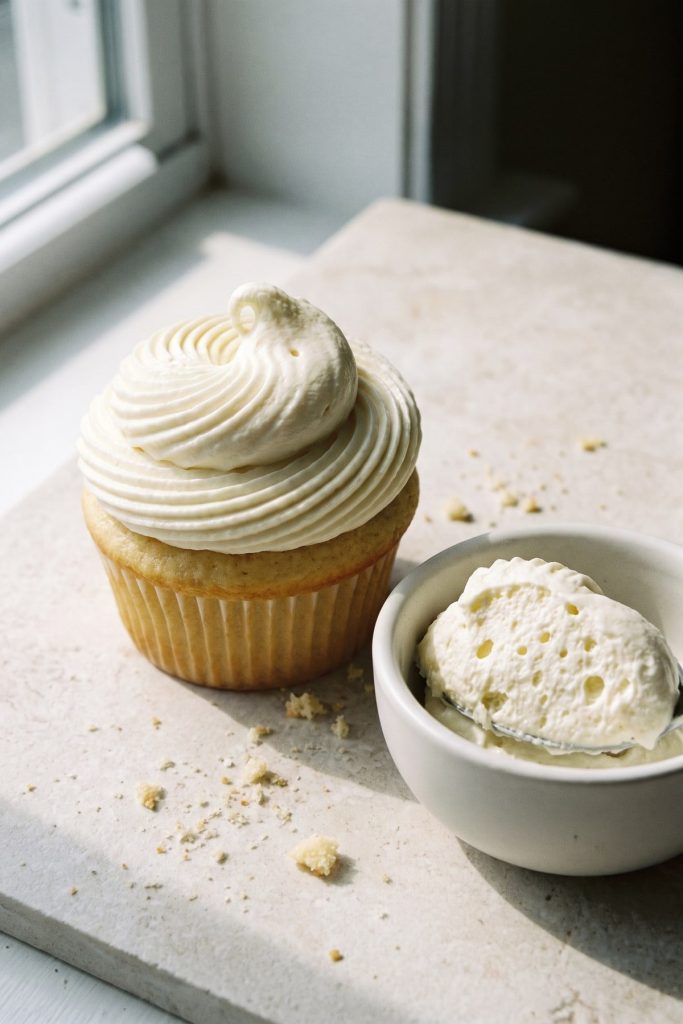
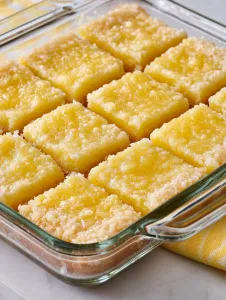
Spoon it over berries, pancakes, waffles, or a slice of 7 Up Pound Cake. Pipe simple swirls onto Pineapple Upside-Down Cupcakes, or use it as a lighter topping for Cream Cheese Squares. It also works as a cool, tangy layer in a Strawberry Cream Cheese Icebox Cake.
This cream is best for toppings, fillings, and simple piping that can stay refrigerated. Buttercream is the stronger choice for tall decorations, tiered cakes, long travel, or a warm outdoor table.
Storage and make-ahead
Cream cheese whipped cream is best the day it is made. Cover the bowl and refrigerate it for up to 2 days. If it softens slightly, whisk it briefly by hand before serving; stop as soon as the texture is even again. Keep frosted desserts refrigerated until close to serving time.
Freezing can change the texture as the cream thaws, so it is not the best make-ahead method for a smooth topping. If a finished frozen dessert already uses the cream, thaw it in the refrigerator and expect a softer finish.
Frequently asked questions
Can cream cheese whipped cream be piped?
Yes, it can hold simple stars, borders, and cupcake swirls while it remains chilled. It is softer than buttercream, so it is not the right choice for tall flowers, stacked decorations, or a dessert that must sit in warm conditions.
Why is my cream cheese whipped cream lumpy?
The cream cheese was probably still firm when the cold cream was added, or the cream went in too quickly. Beat the cream cheese mixture smooth first, add a small amount of cream, scrape the bowl, and only then stream in the rest.
Can I use spreadable cream cheese from a tub?
Brick-style full-fat cream cheese is the more dependable choice because spreadable products vary in moisture and stabilizers. A tub product may make a softer cream that does not hold piped shapes as well.
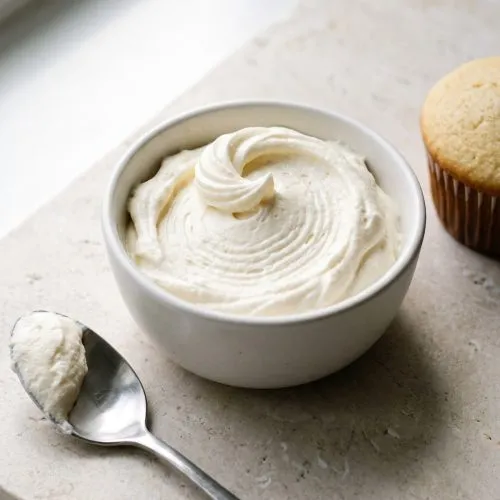
Cream Cheese Whipped Cream
Want This Recipe Later?
Ingredients
- 4 ounces cream cheese 113 g; full-fat brick style, cool and pliable
- 1/4 cup confectioners' sugar 30 g
- 1 teaspoon vanilla extract 5 ml
- fine salt one small pinch
- 1 cup heavy whipping cream 240 ml; cold
Instructions
- Beat the cream cheese, confectioners' sugar, vanilla and salt on medium-low speed until completely smooth. Scrape the bowl and beater.

- With the mixer on low, slowly add about one-quarter of the heavy cream. Mix until uniform, then scrape the bowl again.
- Stream in the remaining cream. Increase the speed to medium-high and whip until the whisk leaves defined trails and stiff peaks hold with a slight curl at the tip.
- Use immediately, or cover and refrigerate for up to 2 days. Keep desserts made with the cream chilled until close to serving.