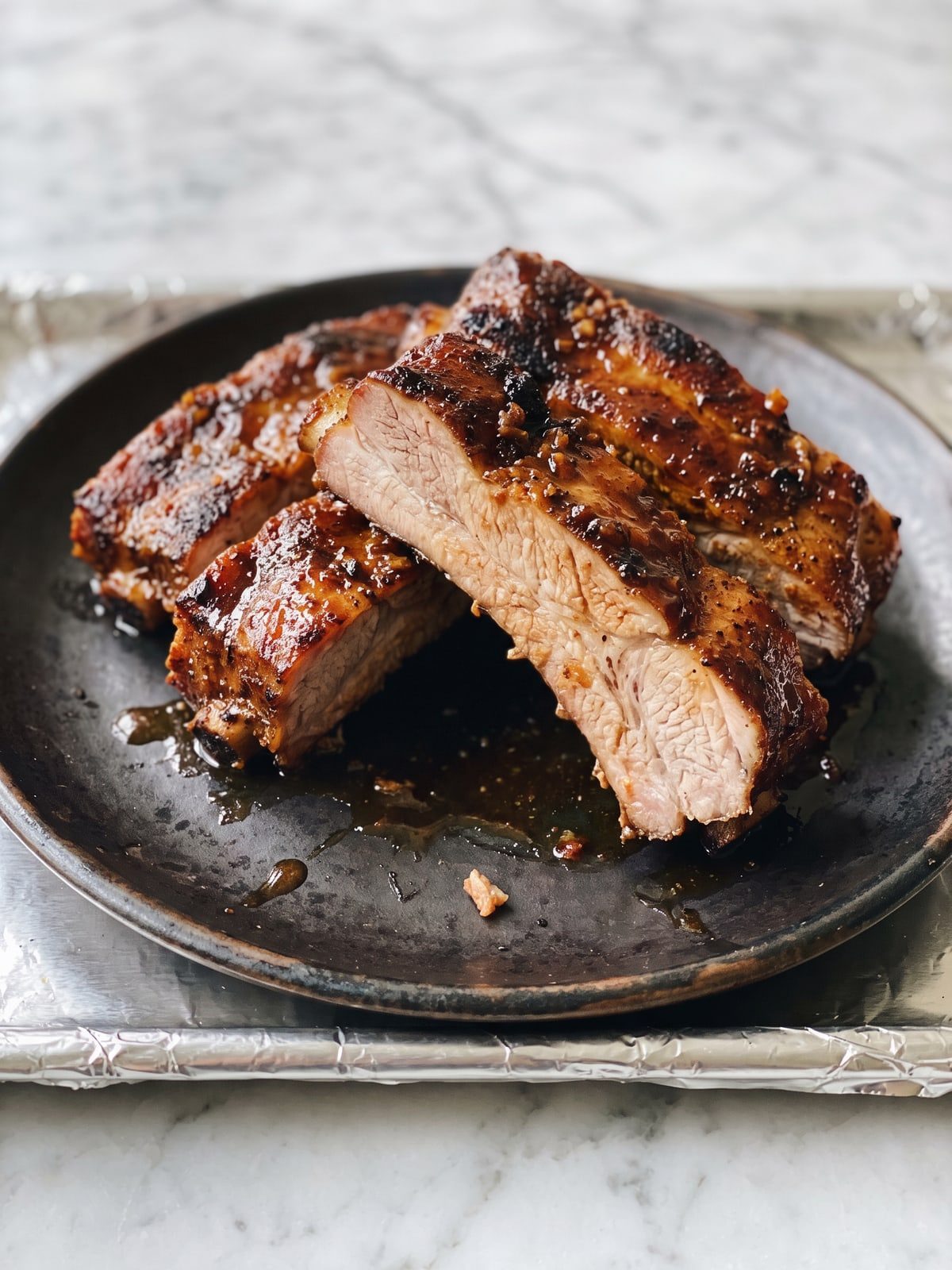
Oven-Roasted Country Style Pork Ribs are tender and savory, with a sweet, smoky seasoning crust that makes them a comforting weekend dinner. Add the optional barbecue finish when you want a sticky, caramelized surface; leave it off when you’d rather taste the dry rub.
How to make country style pork ribs: Season shoulder/butt country-style ribs, cover them tightly, and roast at 325°F for 2 1/2 hours. If you want a sauced finish, brush them with barbecue sauce and broil uncovered for about 5 minutes.
Why You’ll Love It
- Little hands-on work: You mix the seasoning, cover the dish, and let the oven handle the long roast.
- Two finishes: Serve the seasoned ribs as they are, or add a glossy barbecue coating.
- A useful doneness cue: You can check the meat with a fork as well as a thermometer, so you’re not relying on the clock alone.
- Easy cleanup: Foil lines the baking dish and the optional broiling sheet.
Ingredient Notes
Country-style pork ribs: Buy a package labeled shoulder or butt for this recipe. “Country-style” does not always identify the same cut, so read the package rather than choosing by the shape of the pieces. I look for the cut name before I think about the seasoning.
Brown sugar and spices: Brown sugar sits alongside smoked paprika, ground mustard, onion powder, garlic powder, black pepper, and cayenne. Mix them together before they touch the pork so you can spread the seasoning across the pieces rather than leaving a patch of sugar on one rib and most of the spice on another.
Kosher salt: Measure it with the rest of the seasoning before you start rubbing the meat. I like to get that small job out of the way first; once the pork is in the dish, you can see which surfaces still need some of the mixture.
Barbecue sauce: You need it only if you choose the broiled finish. The dry-rubbed ribs can be served without sauce, while the broiled ribs have a darker, stickier outside. I save the sauce for the end rather than putting it under the foil.
Ingredients
- 2 1/2 to 3 pounds country-style pork ribs (shoulder/butt ribs)
- 3 tablespoons brown sugar
- 2 teaspoons kosher salt
- 1 teaspoon ground mustard
- 1 teaspoon smoked paprika
- 1 teaspoon onion powder
- 1 teaspoon garlic powder
- 1 teaspoon black pepper
- 1/2 teaspoon cayenne pepper
- 1/4 cup barbecue sauce (for the optional broiled finish)
How to Make Oven-Roasted Country Style Pork Ribs
1. Heat the oven. Preheat it to 325°F and line a 13 x 9-inch baking dish with aluminum foil. Set the dish where you can arrange the ribs without having to stack them. If you plan to use the barbecue finish, have a foil-lined baking sheet ready for that stage.
2. Season the ribs. Mix the brown sugar, kosher salt, ground mustard, smoked paprika, onion powder, garlic powder, black pepper, and cayenne. Apply the mixture to the ribs, turning the pieces so the seasoning reaches their exposed surfaces. You want to see seasoning across the meat, not a mound left in the bowl.
3. Roast covered. Space the ribs apart in the prepared baking dish and cover it tightly with foil. Roast on the middle rack for 2 1/2 hours. When you check them, the shoulder/butt ribs should be fall-apart tender; take care as you lift the foil because the steam and pan liquid are hot.
4. Add the optional barbecue finish. Set the oven to broil. Transfer the ribs to the foil-lined baking sheet, brush them with the barbecue sauce, and broil uncovered for about 5 minutes. Watch for the sauce to start caramelizing, then remove the ribs from the heat rather than waiting for the coating to turn dark all over.
5. Check and rest. Check the pork with a food thermometer; it must reach at least 145°F before you remove it from the heat. Let it rest for at least 3 minutes before serving. The thermometer establishes the minimum safe temperature, while the fall-apart feel tells you whether these shoulder/butt ribs have reached the texture you want.
How to Tell When Country-Style Ribs Are Done
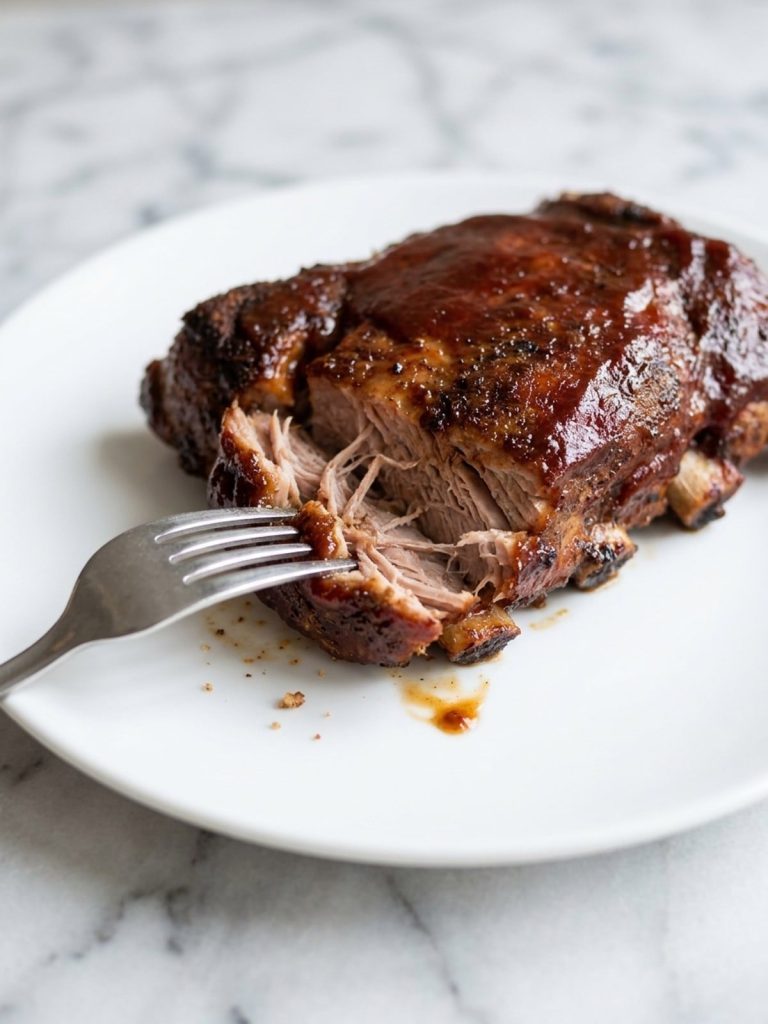
The question is really about two different checks. A food thermometer tells you whether the pork has reached the 145°F minimum, followed by a rest of at least 3 minutes. It does not promise that a shoulder/butt rib will pull apart easily.
For the texture of these ribs, gently test a piece with a fork after the covered roast. The meat should give and come apart rather than resist as a firm piece. I use the fork for that texture decision and the thermometer for the temperature decision; neither check replaces the other.
Keep the foil on during the long roast, then uncover the ribs only when you are ready to assess them or move them for the optional sauce finish. Once brushed with sauce, they go under the broiler uncovered. That last stage changes the outside from seasoned and tender to glossy and lightly caramelized; it isn’t a substitute for the covered roast.
Tips for Success
Why did liquid splash when I opened the dish?
The covered dish can hold hot steam and pan liquid. Lift the foil carefully, keeping your hands and face clear, and leave the dish level while you look at the meat. I set the dish down before opening it instead of trying to manage hot foil while moving the pan.
Why did my barbecue coating get too dark?
The broiled coating should just start to caramelize. If it is heading toward a dark, scorched surface, take the sheet out rather than leaving it under the broiler for the sake of the clock. Watch the sauce itself; its color is more useful here than an extra minute of cooking.
Storage & Reheating
USDA FSIS says to refrigerate leftovers within 2 hours in shallow, covered containers; keep them in the refrigerator for 3 to 4 days or freeze them for 3 to 4 months. Reheat leftovers to 165°F, checking with a food thermometer. Thaw frozen ribs in the refrigerator, cold water or microwave, never on the counter.
What to Serve With It
For another barbecue-style pork dinner, try root beer BBQ pork ribs. If you’re planning other dinners for the week, there are apple brown sugar pork chops, onion gravy pork roast, and savory pork tenderloin. For pork with apples, choose pork chops and apples or apple onion pork.
Frequently Asked Questions
What is the difference between country-style ribs and regular ribs?
Country-style ribs are not true ribs. They are thick strips cut from the pork shoulder (butt), sold bone-in or boneless, so they cook more like a small roast. Spare ribs and baby back ribs come from the rib cage and are cooked as a rack.
How long do country-style ribs take in the oven?
About 2 1/2 hours covered at 325°F for these, until the meat pulls apart with a fork, plus about 5 minutes under the broiler if you add the barbecue sauce.
Can I use a package labeled loin or sirloin country-style ribs?
Choose shoulder/butt ribs for these instructions. Loin- or sirloin-cut pieces may share the country-style name, but this recipe’s covered-roast timing and fall-apart texture cue are for shoulder/butt ribs.
Final Notes
Keep a clear space ready for the hot baking dish before you lift the foil. If you have a question or make the ribs, tell me how they turned out in the comments.
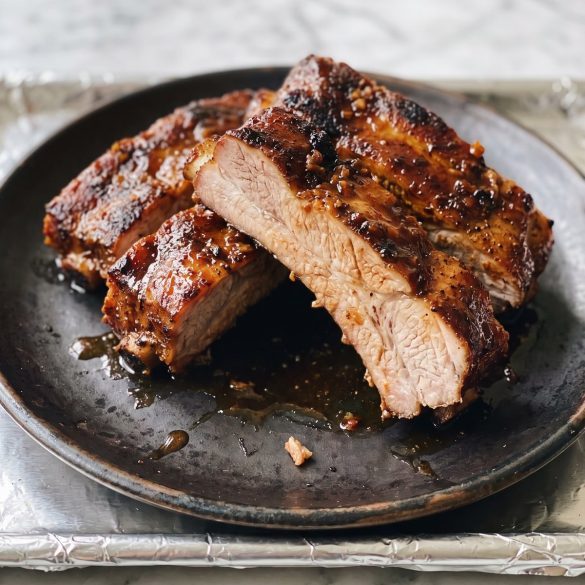
Oven-Roasted Country Style Pork Ribs
Want This Recipe Later?
Ingredients
- 2 1/2 to 3 pounds country-style pork ribs shoulder/butt ribs
- 3 tablespoons brown sugar
- 2 teaspoons kosher salt
- 1 teaspoon ground mustard
- 1 teaspoon smoked paprika
- 1 teaspoon onion powder
- 1 teaspoon garlic powder
- 1 teaspoon black pepper
- 1/2 teaspoon cayenne pepper
- 1/4 cup barbecue sauce for the optional broiled finish
Instructions
- Preheat the oven to 325°F and line a 13 x 9-inch baking dish with aluminum foil.
- Mix the brown sugar, kosher salt, ground mustard, smoked paprika, onion powder, garlic powder, black pepper, and cayenne pepper. Apply the mixture to the ribs.
- Space the ribs apart in the baking dish and cover tightly with foil. Roast on the middle rack for 2 1/2 hours, until the shoulder/butt ribs are fall-apart tender. Use care when uncovering the hot dish.
- Set the oven to broil. Transfer the ribs to a foil-lined baking sheet, brush with the barbecue sauce, and broil uncovered for about 5 minutes, until the sauce starts to caramelize.
- Check the pork with a food thermometer: it must reach at least 145°F before removal from the heat. Let it rest for at least 3 minutes before serving. Check for the fall-apart tenderness described in the roasting step as a separate texture cue.
Notes
Nutrition
Made this recipe? Tap a star to rate it.