I still remember the first time I tasted this casserole. It wasn’t Thanksgiving, interestingly enough. It was a random Sunday in early November, the kind of gray afternoon where you light a candle just because. A friend had brought over leftovers from Ruth’s Chris Steak House, and tucked between the steak and creamed spinach was this unassuming scoop of sweet potato casserole.
One bite. That’s all it took.
Save This Recipe
It was creamy but not soupy, sweet but not cloying, and that pecan topping—oh my goodness—had just enough crunch to keep things interesting. I remember thinking, Why does this feel like dessert pretending to be a side dish? And also, Why don’t we eat this more than once a year?
Fast forward a couple decades and a lot of home cooking later, and this casserole has become one of those recipes I pull out when I want people to feel cared for. Holidays, yes. But also Sunday suppers, church potlucks, and the occasional “rough week, let’s eat something comforting” night.
Why You’ll Love This One (And Probably Make It Again)
There’s no shortage of sweet potato casseroles floating around, but this one earns its keep. Here’s why it tends to stick around once you try it: Try our Slow Cooker 4-Ingredient Amish Chicken and Sweet Potatoes next.
-
That restaurant-style richness you usually only get when someone else is doing the dishes
-
Simple, familiar ingredients—nothing you have to hunt down at a specialty store
-
Creamy-meets-crunchy balance that makes every bite feel finished
-
Plays well with others, from roast turkey to plain old pork chops
-
Make-ahead friendly, which matters more than we admit during the holidays
It’s dependable. And honestly, dependable recipes are the ones that last.
Let’s Talk Ingredients (And a Few Gentle Swaps)
I’ve learned over the years that ingredients behave differently depending on the day, the brand, and sometimes your mood. So here’s what you need to know—without overthinking it.
Sweet Potatoes
Fresh sweet potatoes are my preference. Roasting them brings out their natural sugars and keeps the texture silky instead of watery. That said, canned sweet potatoes will work if that’s what you have. Just drain them well and mash thoroughly.
Butter
Real butter. Unsalted if possible, so you control the salt. It goes into both layers, and yes, it matters. This is not the time for restraint.
Sugar
Granulated sugar sweetens the potatoes, while brown sugar belongs in the topping. Brown sugar adds that cozy, caramel note that makes people ask what your secret is.
Pecans
Chopped fairly fine, not dust. Pecans are classic here, especially if you grew up anywhere south of the Mason-Dixon line. Walnuts can sub in, but pecans feel right. If you like this, you'll love our Slow Cooker Scalloped Potatoes.
Eggs
They bind everything together. The casserole won’t taste eggy, promise. Just don’t skip them.
Vanilla Extract
A small amount, but it softens the sweetness and gives the potatoes a rounder flavor. Use real vanilla if you can—it’s one of those background notes that quietly does its job.
How to Make It, One Comfortable Step at a Time
This recipe isn’t complicated, but it rewards a little attention. Put some music on. Preheat the oven. Let yourself enjoy it.
Step 1: Make the Pecan Topping
In a medium bowl, mix together:
-
1 cup brown sugar
-
½ cup all-purpose flour
-
1 cup chopped pecans
-
½ cup melted butter
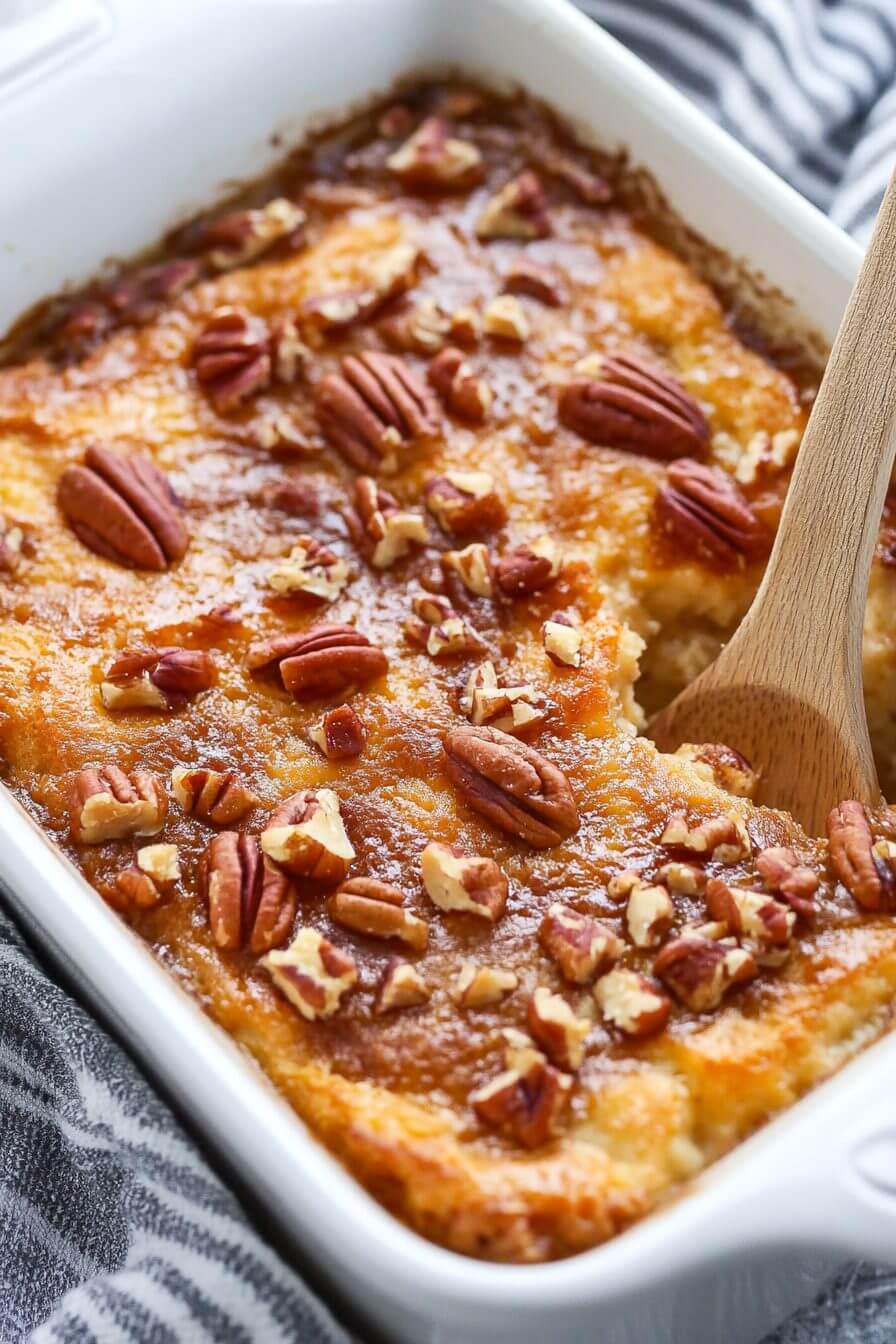
Stir until crumbly. It should look like damp sand at the beach—not wet, not dry. Set it aside and try not to snack on it too much.
Step 2: Prepare the Sweet Potato Base
Preheat your oven to 350°F and lightly grease a 9×13 baking dish.
In a large bowl, combine:
-
3 cups mashed, cooked sweet potatoes (cooled)
-
1 cup granulated sugar
-
½ teaspoon salt
-
1 teaspoon vanilla extract
-
2 eggs, beaten
-
½ cup melted butter
Mix until smooth. If you see a lump or two, don’t panic. This isn’t a beauty contest.
More easy dinners you might like

Step 3: Assemble
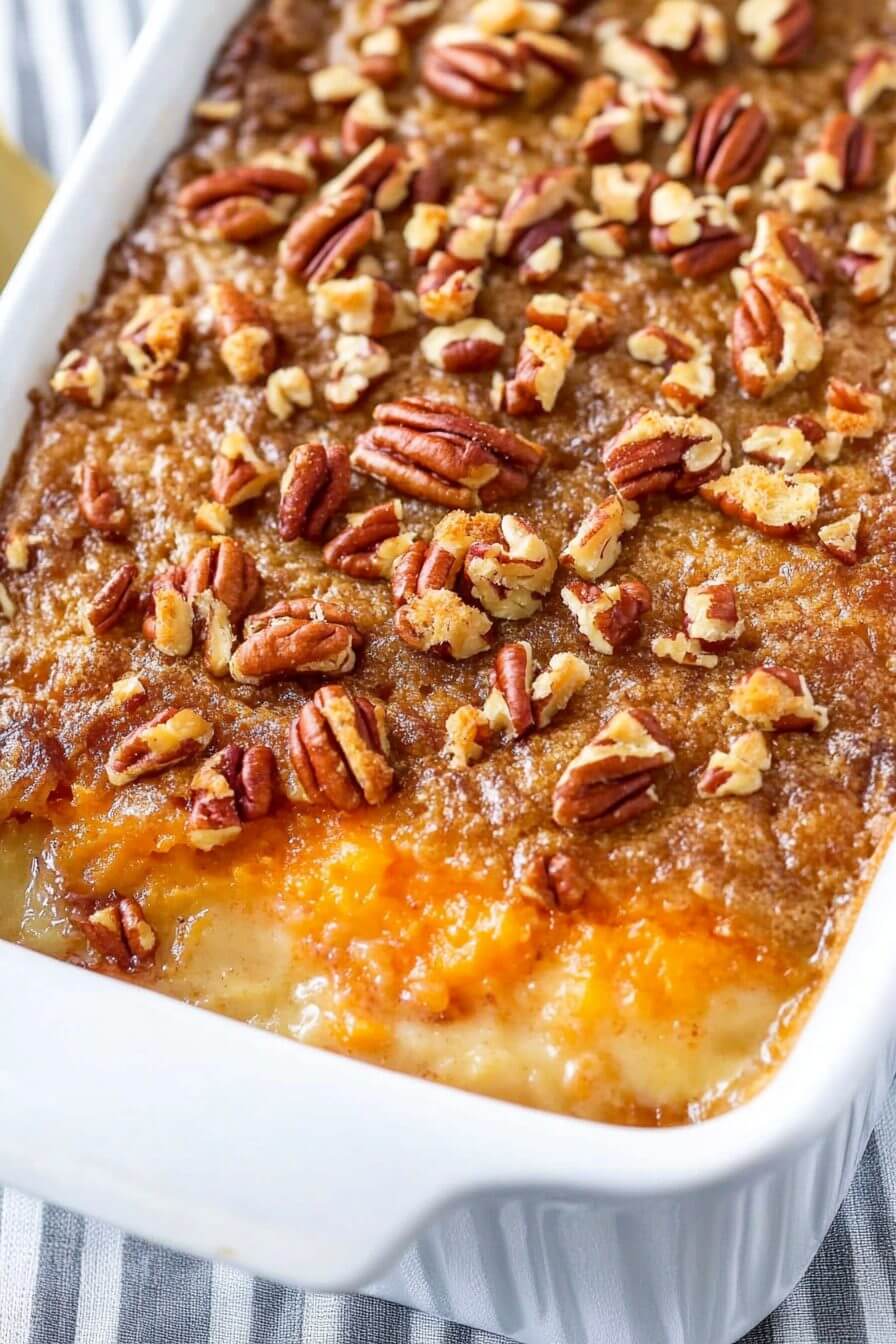
Spread the sweet potato mixture evenly in your prepared dish. Take a moment to smooth the top—this helps the topping bake evenly.
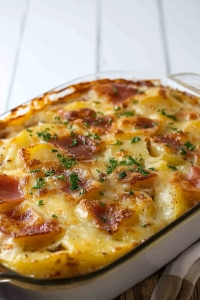
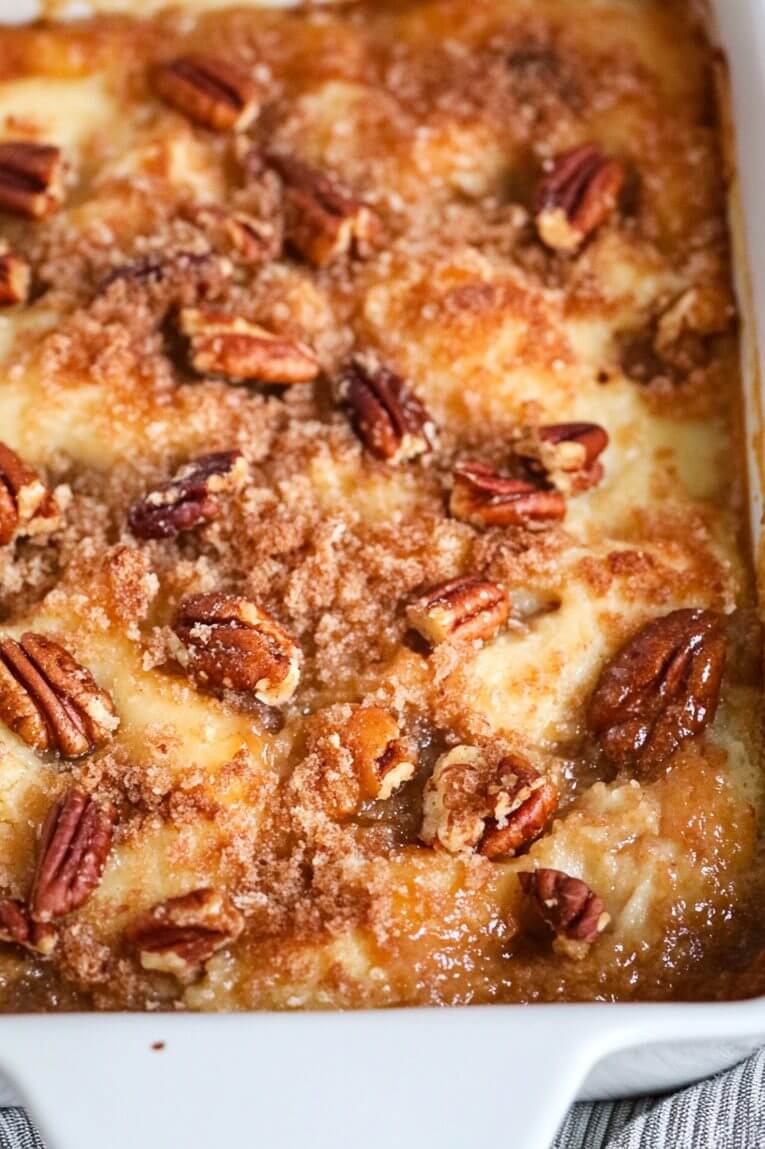
Sprinkle the pecan mixture over the top, covering it completely. Every corner deserves a little crunch. For another easy option, see our Copycat Ruth’s Chris Potatoes au Gratin.
Step 4: Bake and Let It Rest
Bake uncovered for about 30 minutes, until the top is golden and fragrant.
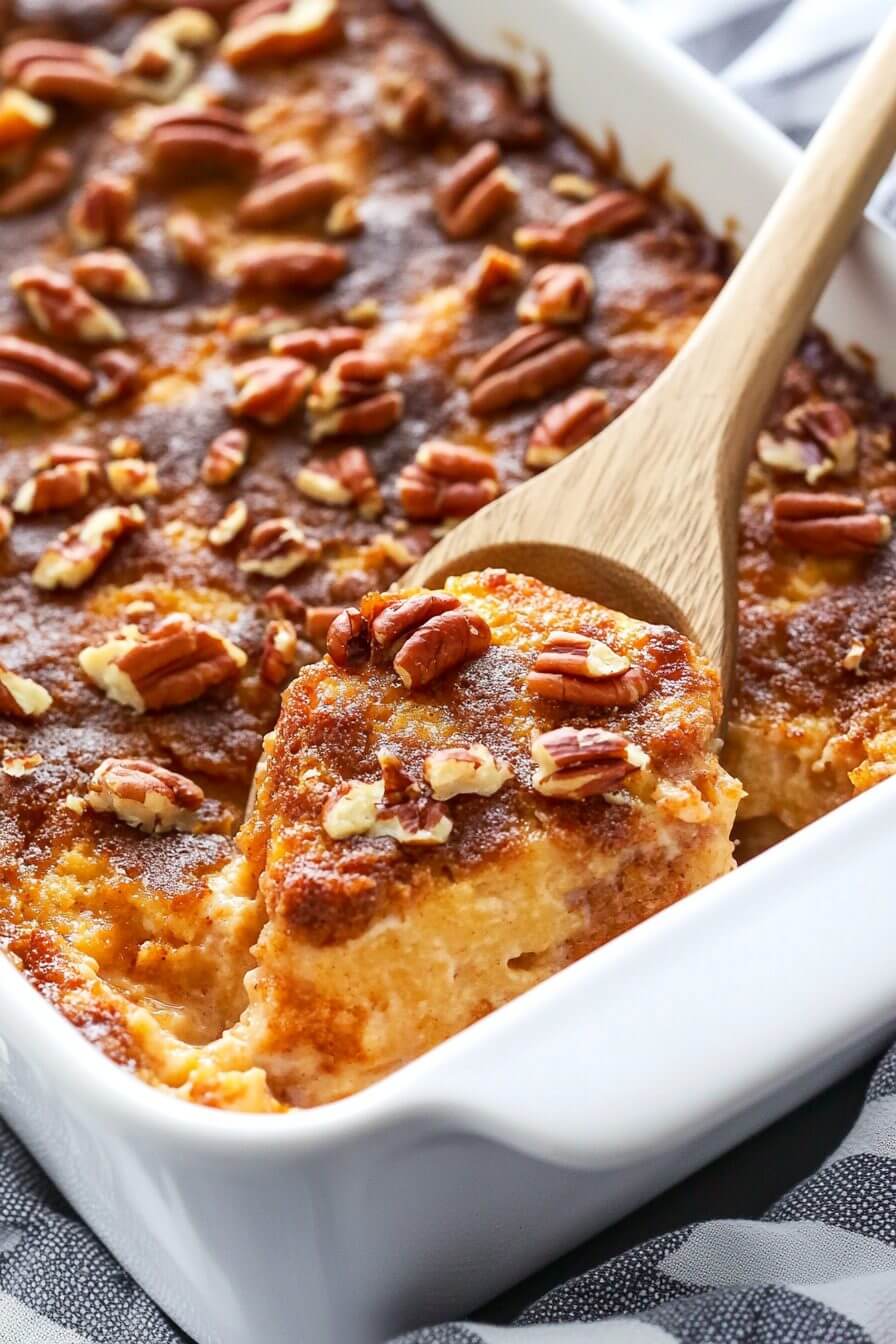
Here’s the hard part: let it sit for at least 30 minutes before serving. It sets as it cools, and the texture improves. Trust me on this.
Ways to Make It Your Own (Without Losing the Soul)
One of the reasons this casserole sticks around is its flexibility. Here are a few variations that still respect the original spirit.
-
Marshmallow topping instead of pecans, if your family insists
-
Gluten-free crust using a 1:1 flour blend or finely ground oats
-
Nut-free version with crushed graham crackers or sunflower seeds
-
Less sweet by cutting the sugar in the base to ¾ cup
-
A savory nudge with a pinch of smoked paprika or cayenne
I’ve tried most of these over the years. Some stuck. Some didn’t. That’s half the fun.
Serving Ideas Beyond the Big Holidays
Yes, it belongs on the Thanksgiving table. But it doesn’t have to wait all year.
-
Alongside roast chicken on a Sunday
-
With pork chops and green beans on a chilly weeknight
-
On a brunch buffet next to quiche
-
Slightly warmed with a spoonful of whipped cream as a dessert-adjacent treat
Food doesn’t need labels. If it tastes good, it works.
Frequently Asked Questions
Mine came out softer than I expected—did I do something wrong?
Probably not. This casserole is meant to be creamy, almost spoonable, especially when it’s still warm. It firms up a bit as it rests, which is why I always nudge people to let it sit before serving. I’ve pulled it too early more than once, and it was still delicious—just a little looser on the plate.
Can I really use canned sweet potatoes, or is that a bad idea?
You know what? It’s not a crime. I prefer fresh because the flavor feels deeper, but I’ve absolutely used canned when time got away from me. Just drain them well and mash them thoroughly. The texture might be slightly softer, but no one has ever pushed their plate away.
I forgot to take the eggs out ahead of time—does that matter?
Not much. Room temperature eggs mix a bit more smoothly, but cold eggs won’t ruin anything. I’ve cracked them straight from the fridge plenty of times, usually while muttering at myself, and the casserole still turned out just fine.
Is this supposed to be really sweet? My family is split on sweet potato dishes.
It is sweet, yes—but not candy-sweet. That said, tastes are personal, and I get the hesitation. If you’re worried, cutting back the sugar in the potato layer slightly helps, and the buttery pecan topping keeps it from feeling flat.
Can I bake this earlier in the day and reheat it later?
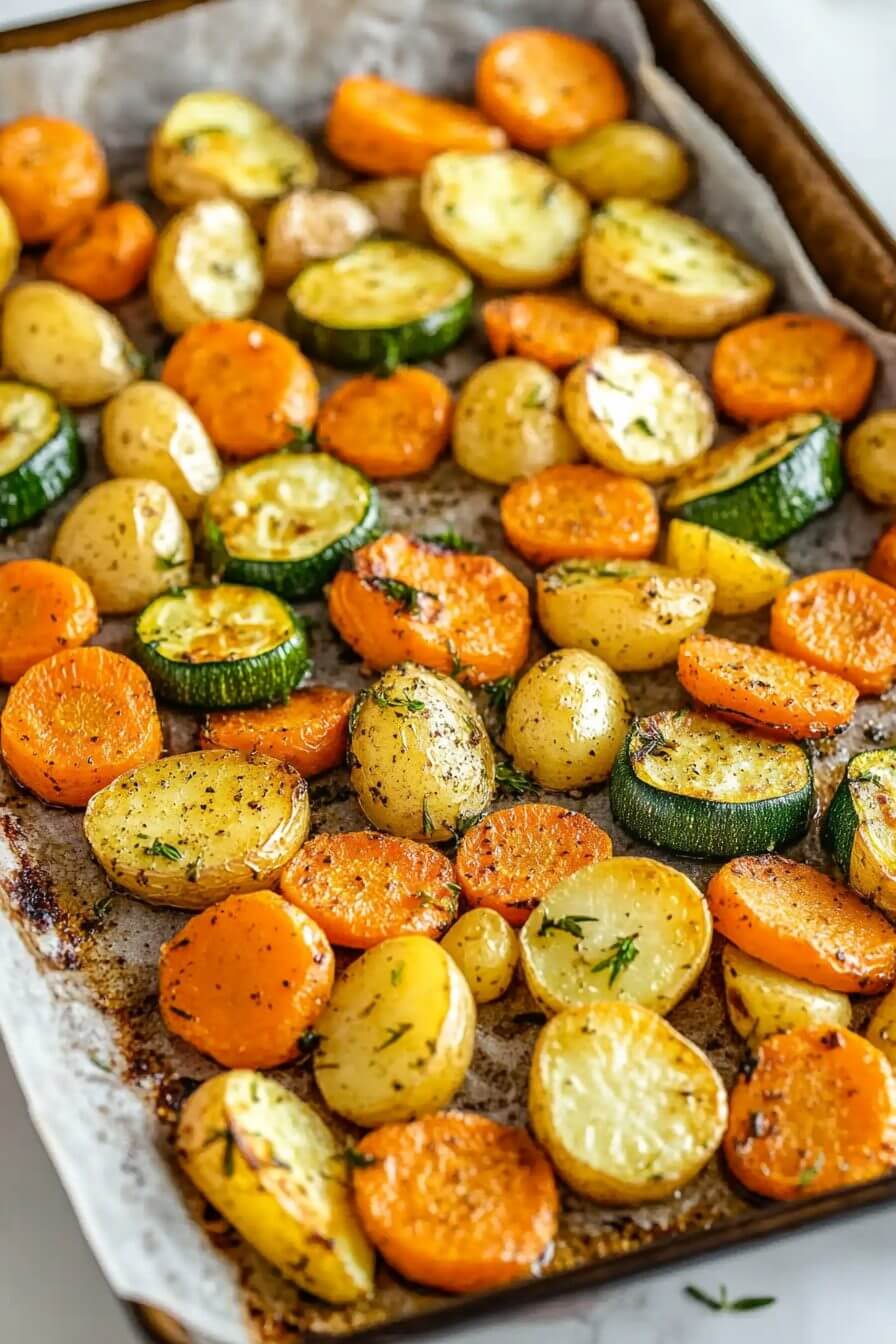
Absolutely, and I do it all the time on holidays. Just cover it loosely and warm it back up in the oven before serving. The topping may soften a bit, but it perks back up with heat, and honestly, most people won’t notice anyway. You might also like our Roast Carrots, Potatoes & Onions.
My pecan topping browned really fast—should I have panicked?
No panic needed. Ovens run hot, and sugar can be dramatic. If it starts looking too dark, a loose piece of foil over the top does the trick. I’ve had one get deeper brown than planned, and it still tasted wonderful.
Is this more of a side dish or a dessert? I can’t decide.
That question comes up every year, and I still don’t have a firm answer. It walks that line comfortably, which is part of its charm. I’ve served it next to turkey and later snuck a small scoop with coffee. Both felt right.
Storage, Reheating, and Other Real-Life Details
Refrigeration
Cover leftovers tightly and refrigerate for up to five days. Reheat individual portions in the microwave, or warm the whole dish at 350°F for 10–15 minutes.
Freezing
This casserole freezes beautifully. Wrap well and freeze for up to two months. Thaw overnight in the fridge and reheat until warmed through.
Make-Ahead Tip
You can prep the sweet potato layer and topping a day ahead. Keep them separate, assemble just before baking, and no one will know you planned ahead.
One Last Thought Before You Go
This Ruth’s Chris–style sweet potato casserole isn’t flashy. It doesn’t shout for attention. But it has a way of settling into the table and making people linger just a little longer. Try our Garlic Parmesan Mashed Potato Cups next.
Those are the recipes worth keeping.
If you make it, I’d love to hear how it went—did you tweak it, stick to the script, serve it on a holiday or a Tuesday? Leave a comment or question. I’m usually nearby, probably with a cup of coffee and something baking in the oven. If you like this, you'll love our Cheesy Mashed Potato Puffs.
Ruth’s Chris Sweet Potato Casserole
Ingredients
- 1 cup brown sugar for the crust
- 1/3 cup flour for the crust
- 1 cup chopped nuts pecans preferred, for the crust
- 1/2 cup butter melted, for the crust
- 3 cups mashed sweet potatoes canned or cooked and cooled
- 1 cup sugar for the sweet potato mixture
- 1/2 teaspoon salt for the sweet potato mixture
- 1 teaspoon vanilla extract for the sweet potato mixture
- 2 large eggs well beaten
- 1/4 cup butter melted, for the sweet potato mixture
Instructions
- In a mixing bowl, combine brown sugar, flour, chopped nuts, and melted butter. Stir until well mixed and crumbly. Set aside.
- Preheat your oven to 350°F (175°C). In a large mixing bowl, combine mashed sweet potatoes, sugar, salt, vanilla extract, beaten eggs, and melted butter. Mix thoroughly until smooth.
- Butter a 9×13-inch baking dish. Pour the sweet potato mixture into the prepared dish and spread it evenly. Sprinkle the prepared crust mixture evenly over the top, covering the sweet potato layer completely.
- Place the casserole in the preheated oven and bake for 30 minutes, or until the top is golden brown and crisp. Let the casserole set for at least 30 minutes before serving.
Notes
Nutrition
Nutrition values are estimates based on the listed ingredients and serving count. Actual values vary with brands, cuts and portion sizes.