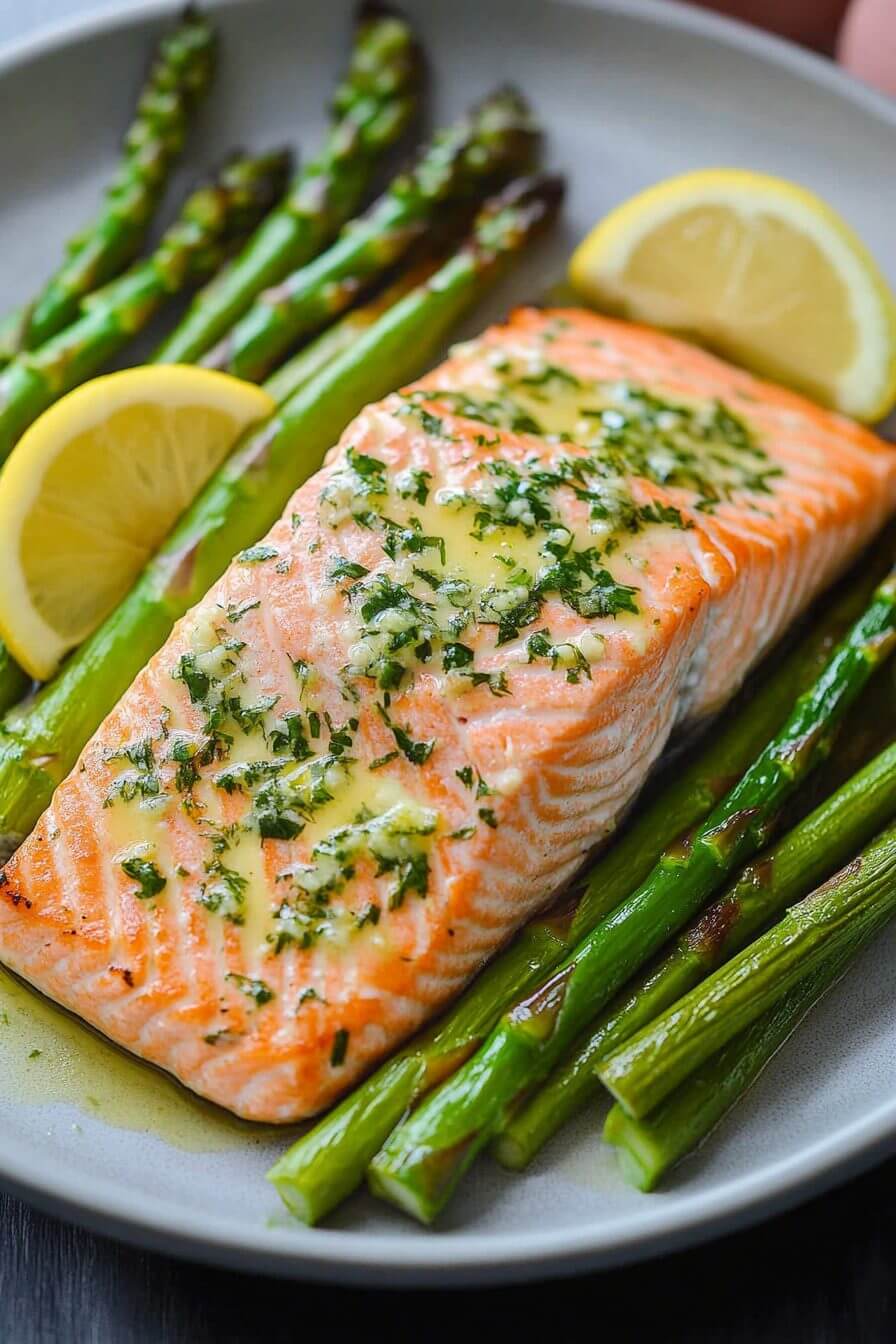
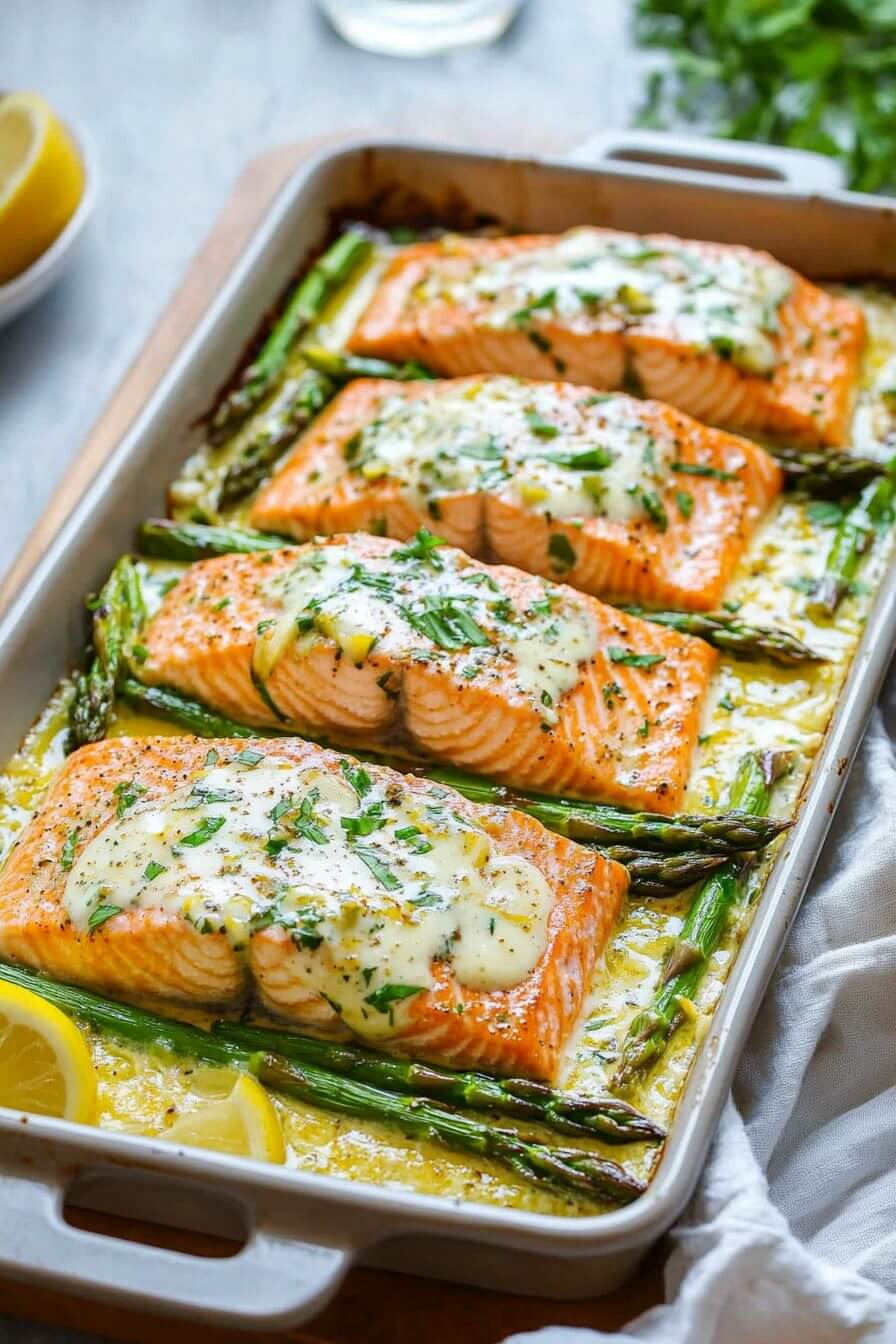
Baked salmon with asparagus in foil packets is a 25-minute dinner for two: each salmon fillet sits on a bed of asparagus, gets a spoonful of lemon garlic butter sauce and a few lemon slices, then the foil is sealed and baked at 425°F. The salmon steams in the butter and lemon juice while the asparagus turns tender-crisp underneath, and cleanup is just two pieces of foil.
How long to bake salmon and asparagus together: 10 to 12 minutes at 425°F in sealed foil packets, until the salmon flakes easily and reaches 145°F in the thickest part. Thicker fillets take the longer end of that time.
Why You’ll Love It
- 25 minutes: 10 to prep and about 12 in the oven.
- No pans to wash: everything bakes in foil on a sheet pan.
- Moist salmon: the sealed packet traps steam and keeps the fish tender.
- Bright, buttery sauce: lemon, garlic and butter cook right into the fish and asparagus.
Ingredient Notes
Salmon fillets: 2 skin-on fillets. Pieces of similar thickness cook at the same rate. The skin side goes down against the asparagus.
Asparagus: 1 bunch, woody ends trimmed. Medium spears match the salmon’s cooking time best.
Butter: 2 tablespoons unsalted, cut into cubes. Half goes into the sauce and half on top of the fish.
Lemon: 1 lemon, halved. Juice one half for the sauce and slice the other to lay over the salmon.
Garlic and liquid: 2 minced garlic cloves and 2 tablespoons of vegetable broth or white wine to make steam inside the packet.
Seasoning: salt, black pepper, a dash of hot sauce if you like, and parsley to garnish.
More recipes you might like
Ingredients
- 2 salmon fillets, skin-on
- 1 bunch asparagus, trimmed
- 2 tbsp unsalted butter, cut into cubes
- 1 lemon, halved (juice from half, slices from the other)
- 2 cloves garlic, minced
- 2 tbsp vegetable broth or white wine
- Salt, to taste
- Black pepper, to taste
- Chopped parsley, for garnish
- 1 dash hot sauce (optional)
How to Make Baked Salmon with Asparagus in Foil
1. Heat the oven. Preheat oven to 425°F.
2. Cut the foil. Cut two large pieces of foil (about 14×12 inches each).
3. Make the sauce. In a small bowl, mix broth or wine, juice from half the lemon, garlic, hot sauce, and half the butter cubes.
4. Assemble. Lay asparagus on each piece of foil. Place a salmon fillet on top, skin-side down. Season with salt and pepper.
5. Add the sauce. Spoon the lemon-butter mixture over each salmon fillet. Top with lemon slices and remaining butter cubes.
6. Seal. Fold foil into packets, sealing tightly. Place on a baking sheet.
7. Bake. Bake for 10–12 minutes, until the salmon flakes easily with a fork and reaches 145°F in the thickest part.
8. Serve. Carefully open packets (beware steam!), garnish with parsley, and serve immediately.
Can You Bake Salmon in Foil?
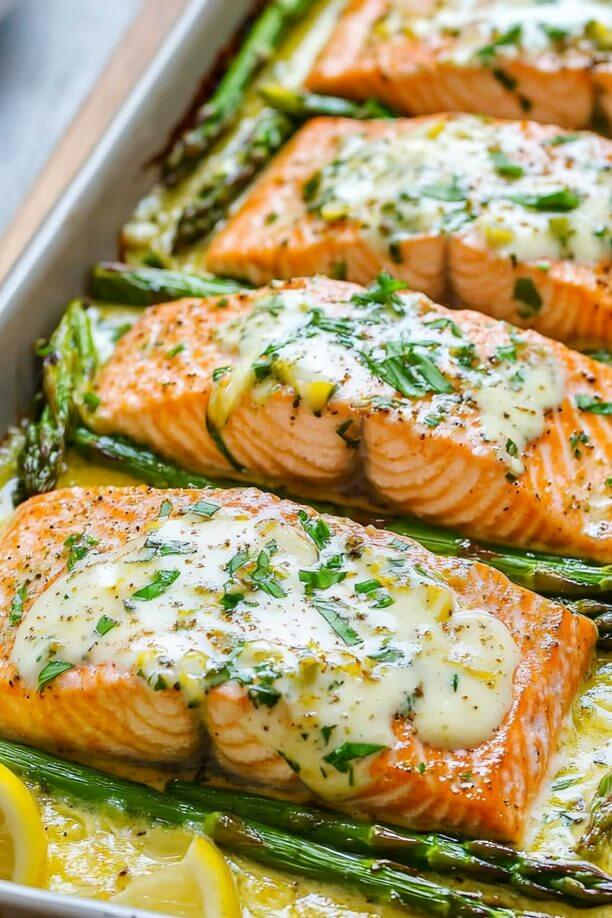
Yes, and it’s one of the easiest ways to keep salmon moist. Sealing the fillet in foil with butter, lemon juice and a little broth or wine traps the steam, so the fish gently cooks in its own juices instead of drying out on a hot pan. The asparagus underneath steams at the same time. The trade-off is that the salmon won’t brown; if you want a little color, open the packets for the last couple of minutes or slide them under the broiler briefly.
Tips for Perfect Salmon Foil Packets
- Seal the edges tightly. Crimp the foil so no steam escapes, but leave a little air space above the fish.
- Match the asparagus to the fish. Thin spears cook faster; use medium spears or cut thick ones in half lengthwise.
- Check early. Thin fillets may be done at 10 minutes. Salmon is cooked at 145°F and flakes easily.
- Open carefully. Hot steam rushes out, so open the packet away from your face.
- Spoon the juices over. The lemon garlic butter that collects in the foil is the sauce.
Good Seasonings for Salmon
- Lemon and garlic: the classic pairing used here.
- Dill: fresh dill sprigs on top of the fish before sealing.
- Cajun or lemon pepper: sprinkle over the salmon instead of plain pepper.
- Mediterranean: add cherry tomatoes and olives to the packet.
- Heat: a dash of hot sauce or red pepper flakes in the butter.
Storage & Reheating
Refrigerate leftovers within 2 hours and eat them within 3 to 4 days. Reheat gently in a covered dish in a low oven so the salmon doesn’t dry out, or flake it cold over a salad.
What to Serve With It
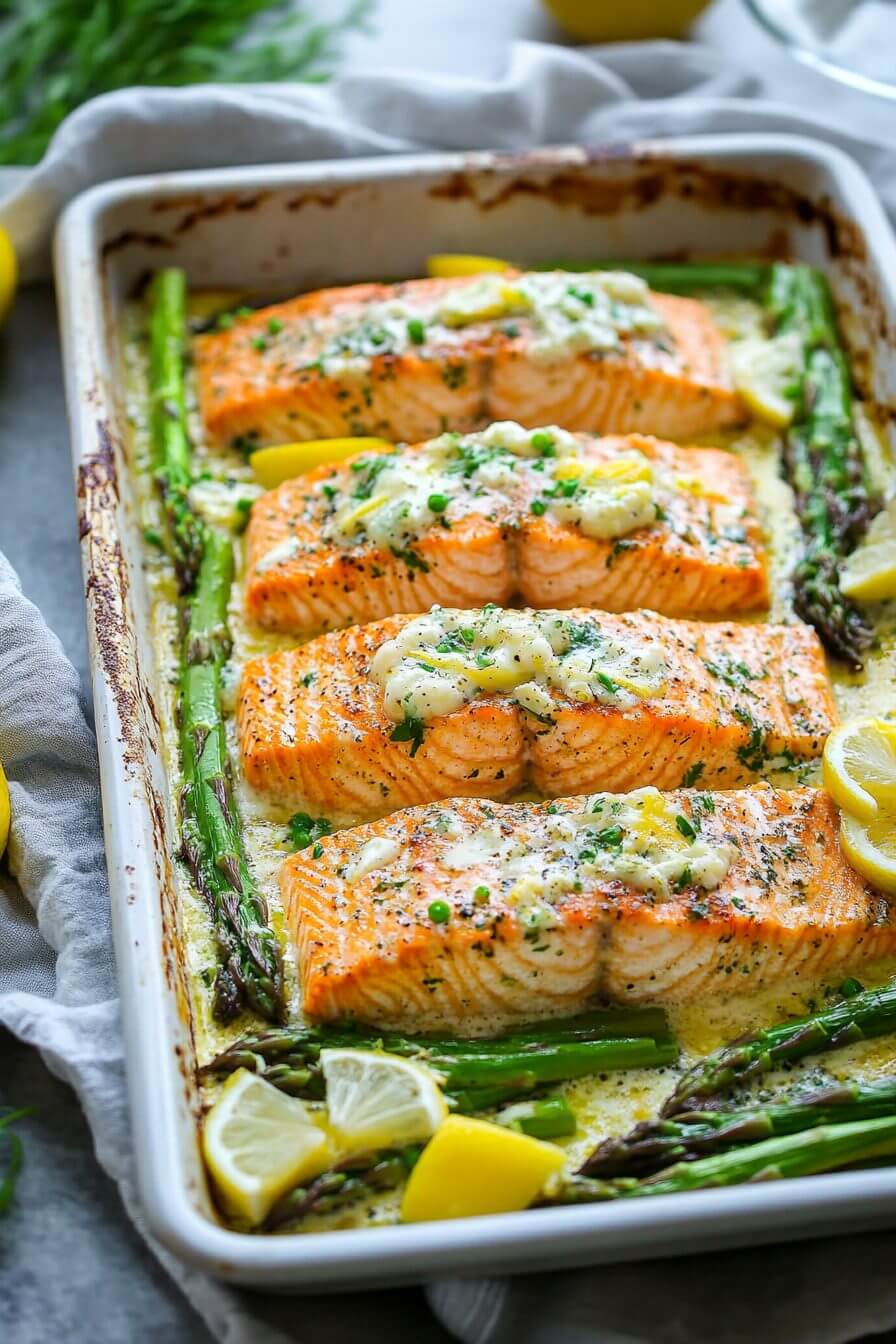
Serve it with rice, roasted potatoes, couscous or crusty bread to soak up the lemon butter.
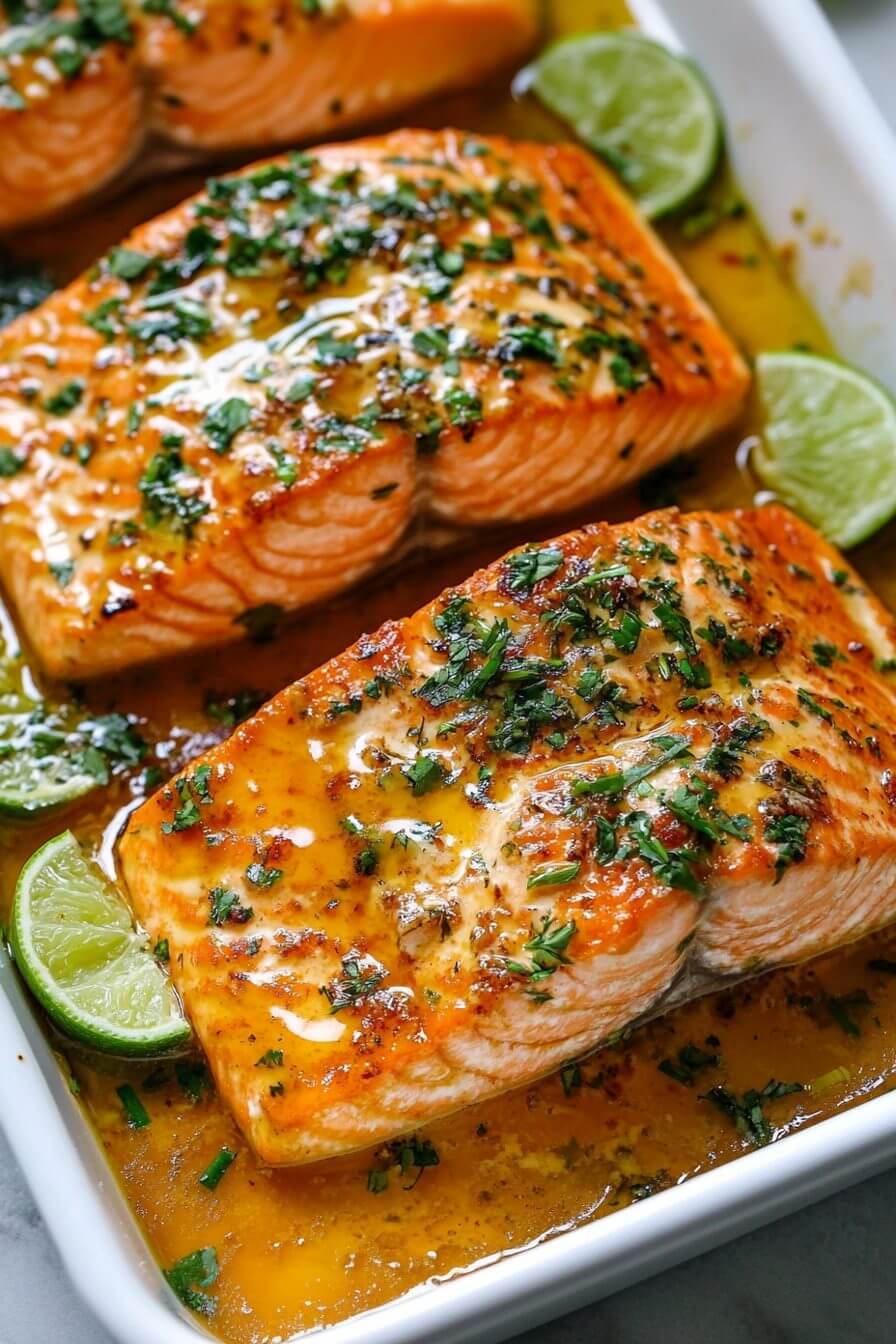
More easy fish dinners: baked honey lime garlic butter salmon, baked cod with lemon and garlic, golden seared cod with herb butter sauce, pan fried tilapia with lemon butter sauce and baked shrimp in lemon butter sauce. For another asparagus dinner, try Caesar chicken with asparagus.
Frequently Asked Questions
How long do you bake salmon and asparagus together?
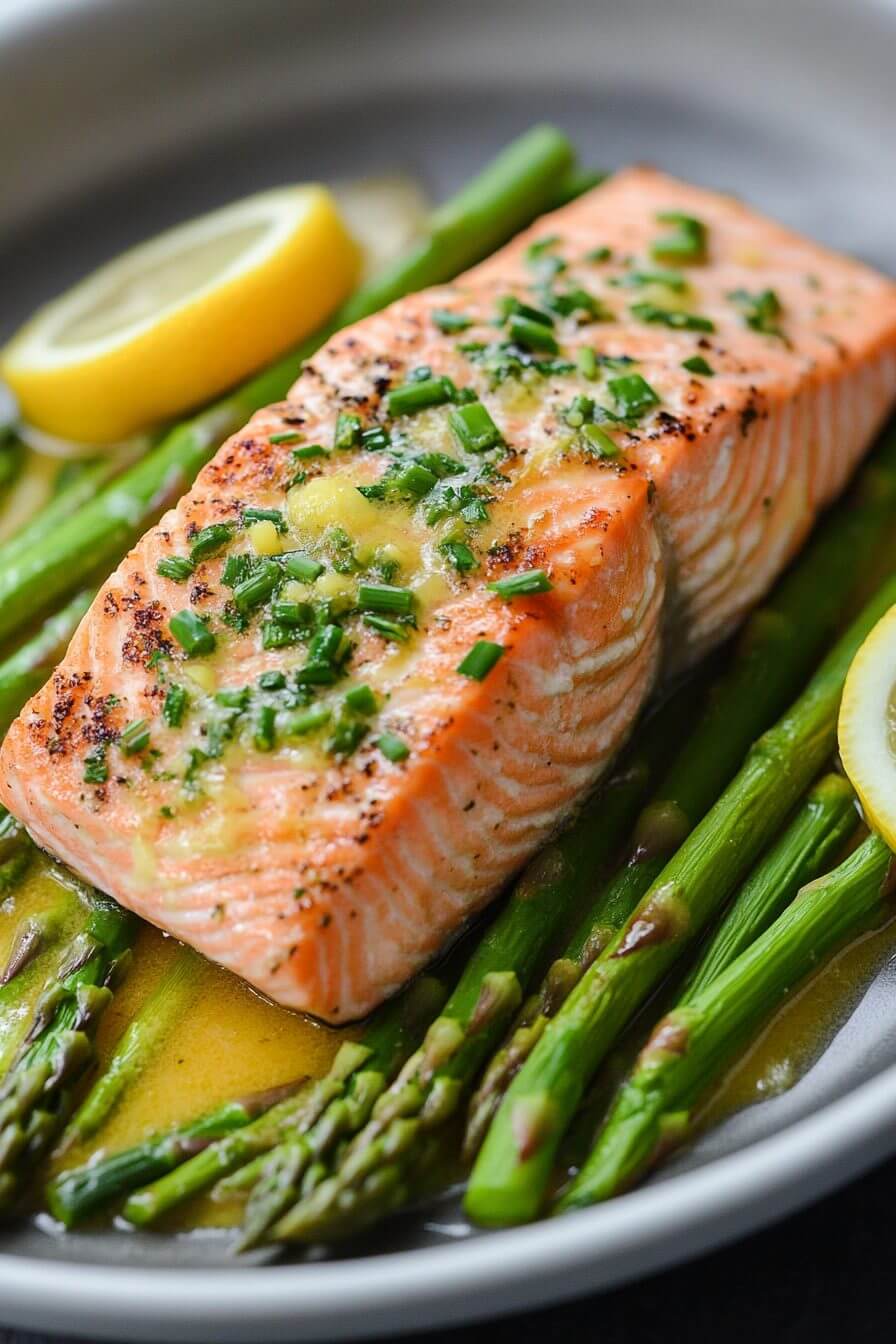
10 to 12 minutes at 425°F in sealed foil packets, until the salmon reaches 145°F.
Can you bake salmon in foil?
Yes. Foil traps the steam and keeps the salmon moist.
What temperature should salmon be cooked to?
145°F in the thickest part, when it flakes easily with a fork.
What are good seasonings for salmon?
Lemon, garlic, dill, black pepper, lemon pepper or Cajun seasoning.
Can I use skinless salmon?
Yes. Lay it on the asparagus the same way.
Can I use shrimp instead?
Yes. Shrimp cooks faster, so bake the packets for 7 to 9 minutes.
Can I make the packets ahead?
Yes. Assemble them up to a few hours ahead, keep them in the refrigerator and bake just before serving.
How long do leftovers keep?
3 to 4 days in the refrigerator.
Final Notes
Seal the packets tightly, check the salmon early and spoon the lemon butter over before serving. If you add dill or cherry tomatoes, tell me in the comments how it turned out.
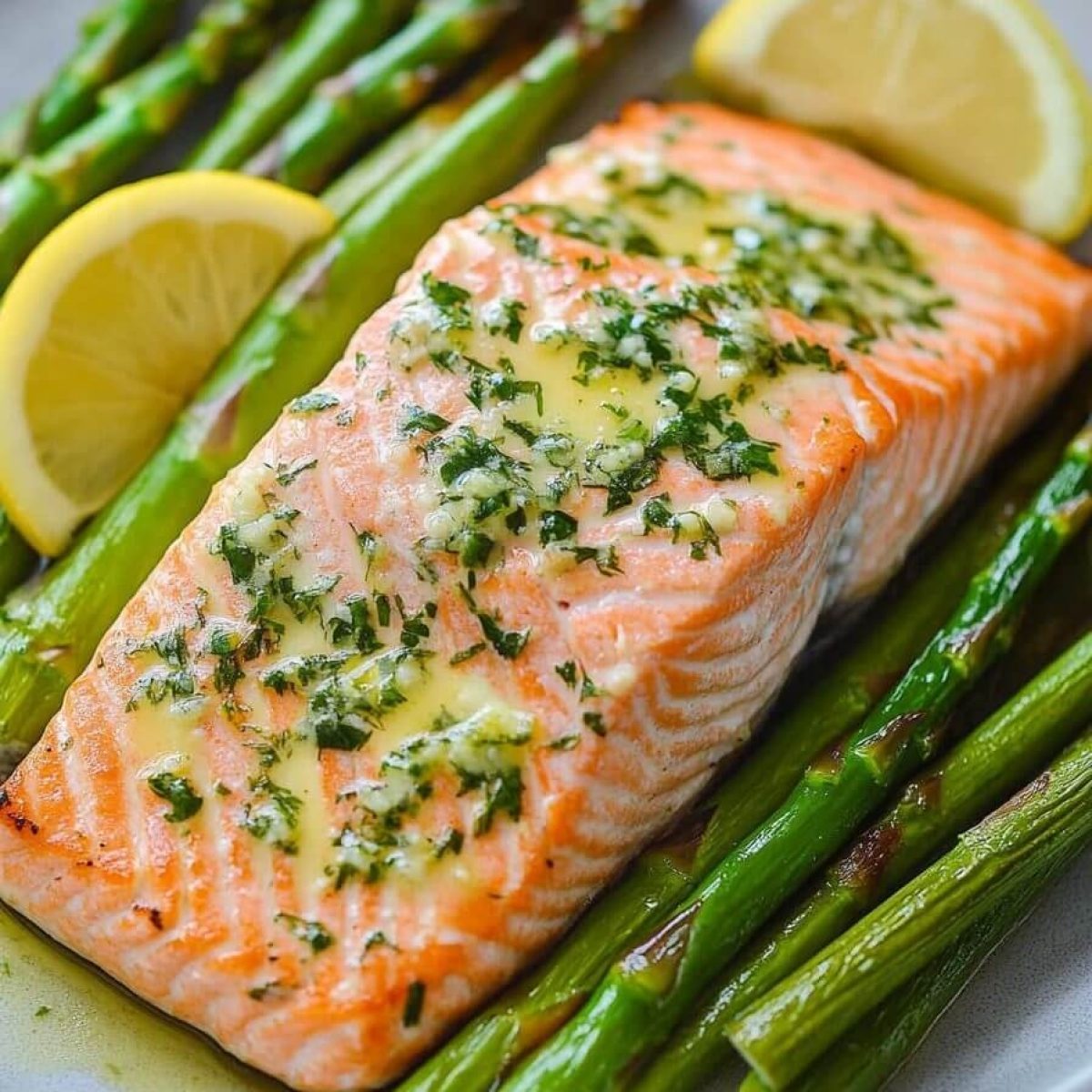
Baked Salmon with Asparagus, Lemon, Garlic and Butter Sauce
Want This Recipe Later?
Ingredients
- 2 salmon fillets skin-on
- 1 bunch asparagus trimmed
- 2 tbsp unsalted butter cut into cubes
- 1 lemon halved (juice from half, slices from the other)
- 2 cloves garlic minced
- 2 tbsp vegetable broth or white wine
- salt to taste
- black pepper to taste
- chopped parsley for garnish
- 1 dash hot sauce optional
Instructions
- Preheat oven to 425°F.
- Cut two large pieces of foil (about 14x12 inches each).
- In a small bowl, mix broth or wine, juice from half the lemon, garlic, hot sauce, and half the butter cubes.
- Lay asparagus on each piece of foil. Place a salmon fillet on top, skin-side down. Season with salt and pepper.
- Spoon the lemon-butter mixture over each salmon fillet. Top with lemon slices and remaining butter cubes.
- Fold foil into packets, sealing tightly. Place on a baking sheet.
- Bake for 10–12 minutes, until the salmon flakes easily with a fork and reaches 145°F in the thickest part.
- Carefully open packets (beware steam!), garnish with parsley, and serve immediately.
Notes
Nutrition
Nutrition values are estimates based on the listed ingredients and serving count. Actual values vary with brands, cuts and portion sizes.