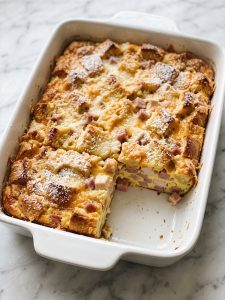

Eggs Benedict Casserole turns the brunch classic into one make-ahead 9×13 dish: toasted, buttered English muffin pieces layered with Canadian bacon, soaked overnight in an egg and cream custard, then baked at 375°F until set. A quick blender hollandaise goes over each portion at the table. It serves 12.
How to make it: Layer chopped Canadian bacon and toasted English muffin pieces in a greased dish. Whisk the eggs with cream, milk and seasonings, pour it over, cover and refrigerate overnight or at least 4 hours. Bake covered for 35 minutes, then uncovered 10 to 15 minutes, until the middle no longer sloshes and reads 160°F. Blend the hollandaise while it bakes.

Why You’ll Love It
- Brunch without the rush: assemble it the night before and bake it in the morning.
- No poaching: the eggs bake into a custard around the muffins and bacon, so there are no individual eggs to watch.
- Feeds a crowd: one 9×13 dish makes 12 servings.
- A blender sauce: the hollandaise comes together in a couple of minutes while the casserole bakes.
Ingredient Notes
English muffins: 6, split with a fork, toasted, buttered and chopped into 1-inch pieces. Gluten-free English muffins work if you need them.
Canadian bacon: 12 ounces, chopped into bite-size pieces. Diced ham works in its place.
Eggs, cream and milk: 8 large eggs whisked with 1 1/3 cups cream and 2/3 cup whole milk make the custard. Any milk works in place of whole milk.
Seasonings: kosher salt, seasoned salt, black pepper, onion powder, paprika and dried mustard powder give the custard the savory, slightly tangy taste of the classic.
Monterey Jack: 1 cup shredded over the top is optional.
Hollandaise: 4 egg yolks, 1/2 cup cream, lemon juice, Dijon mustard, a pinch of cayenne, a dash of salt and 1/2 cup of warm melted butter, blended smooth.
Ingredients
For the casserole
- 6 English muffins, split with a fork, toasted and buttered, then chopped into 1-inch pieces
- 12 ounces Canadian bacon, chopped into bite-size pieces
- 8 large eggs
- 1 1/3 cups cream
- 2/3 cup whole milk (or any milk)
- 1 teaspoon kosher salt
- 1/2 teaspoon seasoned salt
- 1/2 teaspoon black pepper
- 1 teaspoon onion powder
- 1/2 teaspoon paprika
- 1/2 teaspoon dried mustard powder
- 1 cup Monterey Jack cheese, shredded (optional)
- Butter, for greasing the dish (or nonstick spray) and spreading on the English muffins
For the hollandaise
- 4 egg yolks
- 1/2 cup cream
- 2 tablespoons lemon juice
- 1 teaspoon Dijon mustard
- 1/8 teaspoon cayenne pepper
- A dash of kosher salt
- 1/2 cup butter, melted and warm
How to Make Eggs Benedict Casserole
1. Prepare the dish. Grease a 9×13-inch casserole dish with butter or nonstick spray.
2. Chop the Canadian bacon. Chop all the Canadian bacon into bite-size pieces. Spread half of it over the bottom of the dish.
3. Toast the English muffins. Split the English muffins with a fork. Toast each half, spread it with butter, then chop the muffins into 1-inch pieces. Or spread each half with butter, chop the muffins, broil the pieces on an ungreased baking sheet for 1 to 2 minutes, then flip them and broil until toasty.
4. Layer the dish. Add half of the English muffin pieces on top of the Canadian bacon. Repeat with the rest of the Canadian bacon, then the rest of the English muffins.
5. Make the egg mixture. In a large bowl or stand mixer, whisk the eggs, 1 1/3 cups cream, 2/3 cup milk, kosher salt, seasoned salt, black pepper, onion powder, paprika and mustard powder until well mixed.
6. Add the cheese and pour. Sprinkle the Monterey Jack over the top if you are using it. Pour the egg mixture over the English muffins and Canadian bacon, spreading the liquid evenly.
7. Chill. Cover the dish well with foil and refrigerate overnight, or for at least 4 hours.
8. Bake. Take the casserole out of the refrigerator while the oven heats to 375°F, and keep it covered with foil. Bake for 35 minutes. Remove the foil and bake 10 to 15 minutes longer, until the center is set and not liquid-y and reads 160°F on a food thermometer. It may jiggle a little but should not slosh, and a butter knife in the center should come out with no wet egg on it.
9. Start the hollandaise. Put the egg yolks, 1/2 cup cream, lemon juice, Dijon mustard, cayenne pepper and a dash of salt in a blender. Blend on high for at least 30 seconds.
10. Add the butter. Melt the 1/2 cup butter in the microwave for about 15 to 20 seconds, until it is mostly melted but not all the way, then stir until the last of it melts. It should be warm, not steaming hot. With the blender running, add the butter slowly through the small opening in the lid. Keep blending until all the butter is in and the sauce looks smooth and creamy.
11. Serve. Serve the hollandaise over the casserole, drizzled over individual portions or spooned over the whole dish.
Can You Make It the Night Before?

Yes, and that’s the point of it. The assembled dish goes into the refrigerator overnight, or for at least 4 hours, so the English muffins soak up the custard. A longer soak of about 8 hours is common too.
Short on time? You can bake it right away, though it’s better after a few hours in the fridge. Don’t stretch it too long, either: a dish made with raw eggs should be baked within 24 hours of assembling it.
In the morning, take it out of the fridge while the oven heats, keep it covered with foil, and bake. Let it stand about 5 minutes before cutting.
How to Keep It from Getting Soggy
These steps give you a casserole that’s set all the way through:
- Toast and butter the muffins first. Toasting the muffins beforehand adds flavor and texture.
- Give it time to soak. Overnight in the fridge lets the bread take in the custard evenly.
- Bake until the center is set. A little jiggle is fine, but it shouldn’t slosh. A butter knife in the center should come out clean, and a food thermometer should read 160°F.
- Add the sauce last. Spoon the hollandaise over each portion at the table rather than over the whole dish ahead of time.
A Note on Hollandaise and Egg Safety
Homemade hollandaise is made with egg yolks that aren’t cooked to a measured temperature. USDA advises against eating raw or undercooked egg yolks, and it names hollandaise sauce as an example. Young children, older adults, pregnant women and anyone with a weakened immune system are most at risk.
The simple fix is to make the sauce with pasteurized eggs or pasteurized egg products, which the USDA says can be used in hollandaise. A prepared hollandaise from a packet or jar, warmed gently without letting it simmer, is another option.
Make the sauce while the casserole bakes and serve it right away. It thickens as it cools and doesn’t reheat well, so don’t make it ahead.
Variations
- Ham instead of Canadian bacon: use the same amount of diced ham.
- More add-ins: sprinkle chopped fresh chives, grated Parmesan or sautéed mushrooms over the top before baking.
- All milk: use 2 cups of milk in place of the cream and milk for a lighter custard.
- Heartier: use 10 eggs and a full pound of Canadian bacon or ham, and cut the dish into 8 or 9 larger pieces.
- Garnish: chopped chives or parsley, a dash of paprika and a few lemon slices.
Storage & Reheating
Refrigerator: Refrigerate leftovers within 2 hours in shallow covered containers and eat them within 3 to 4 days. Store the casserole and any hollandaise separately.
Freezer: Freeze baked leftovers, without the sauce, for 3 to 4 months. Creamy sauces separate when frozen, so don’t freeze the hollandaise. Thaw in the refrigerator, never on the counter.
Reheating: Reheat covered in the oven or microwave until it reaches 165°F. Don’t reheat leftovers in a slow cooker. Make a fresh batch of hollandaise rather than reheating the old one.
What to Serve With It
Fresh strawberries, orange juice and coffee round out the plate. For a bigger brunch spread, add something sweet like overnight crème brûlée French toast or easy cinnamon roll coffee cake.
For more egg bakes, try homestyle bacon and cheese quiche, bacon egg and hash brown casserole, a sausage, egg and cream cheese hash brown casserole or a bacon, egg and cheese biscuit casserole.
Frequently Asked Questions
Can you make eggs Benedict casserole the night before?
Yes. Assemble it, cover it with foil and refrigerate it overnight or at least 4 hours, then bake it in the morning. Bake it within 24 hours of assembling.
What bread is best for eggs Benedict casserole?
English muffins, split, toasted, buttered and chopped into 1-inch pieces. Gluten-free English muffins work too.
How do you prevent a soggy eggs Benedict casserole?
Toast the muffins, let the custard soak in overnight, bake to 160°F in the middle, and add the sauce at the table.
What are the ingredients for eggs Benedict casserole?
English muffins, Canadian bacon, eggs, cream, milk and seasonings for the casserole, and egg yolks, cream, lemon juice, Dijon mustard, cayenne and butter for the hollandaise.
Can I make the hollandaise ahead?
No. Make it while the casserole bakes and serve it right away; it thickens as it cools and doesn’t reheat well.
Final Notes
Do the work the night before, bake it to 160°F in the morning and blend the sauce while it’s in the oven. If you try it with ham instead of Canadian bacon, tell me in the comments how it turned out.

Eggs Benedict Casserole
Want This Recipe Later?
Ingredients
- 6 English muffins split with a fork, toasted and buttered, then chopped into 1-inch pieces
- 12 ounces Canadian bacon chopped into bite-size pieces
- 8 large eggs
- 1 1/3 cups cream
- 2/3 cup whole milk or any milk
- 1 teaspoon kosher salt
- 1/2 teaspoon seasoned salt
- 1/2 teaspoon black pepper
- 1 teaspoon onion powder
- 1/2 teaspoon paprika
- 1/2 teaspoon dried mustard powder
- 1 cup Monterey Jack cheese shredded; optional
- butter for greasing the dish (or use nonstick spray) and spreading on the English muffins
- 4 egg yolks for the hollandaise; pasteurized eggs are safest
- 1/2 cup cream for the hollandaise
- 2 tablespoons lemon juice for the hollandaise
- 1 teaspoon Dijon mustard for the hollandaise
- 1/8 teaspoon cayenne pepper for the hollandaise
- dash kosher salt for the hollandaise
- 1/2 cup butter melted and warm, for the hollandaise
Instructions
- Grease a 9x13-inch casserole dish with butter or nonstick spray.
- Chop all the Canadian bacon into bite-size pieces. Spread half of it over the bottom of the dish.
- Split the English muffins with a fork. Toast each half, spread it with butter, then chop the muffins into 1-inch pieces. Or spread each half with butter, chop the muffins, broil the pieces on an ungreased baking sheet for 1 to 2 minutes, then flip them and broil until toasty.
- Add half of the English muffin pieces on top of the Canadian bacon. Repeat with the rest of the Canadian bacon, then the rest of the English muffins.
- In a large bowl or stand mixer, whisk the eggs, 1 1/3 cups cream, 2/3 cup milk, kosher salt, seasoned salt, black pepper, onion powder, paprika and mustard powder until well mixed.
- Sprinkle the Monterey Jack over the top if you are using it. Pour the egg mixture over the English muffins and Canadian bacon, spreading the liquid evenly.
- Cover the dish well with foil and refrigerate overnight, or for at least 4 hours.
- Take the casserole out of the refrigerator while the oven heats to 375°F, and keep it covered with foil. Bake for 35 minutes. Remove the foil and bake 10 to 15 minutes longer, until the center is set and not liquid-y and reads 160°F on a food thermometer. It may jiggle a little but should not slosh, and a butter knife in the center should come out with no wet egg on it.
- Put the egg yolks, 1/2 cup cream, lemon juice, Dijon mustard, cayenne pepper and a dash of salt in a blender. Blend on high for at least 30 seconds.
- Melt the 1/2 cup butter in the microwave for about 15 to 20 seconds, until it is mostly melted but not all the way, then stir until the last of it melts. It should be warm, not steaming hot. With the blender running, add the butter slowly through the small opening in the lid. Keep blending until all the butter is in and the sauce looks smooth and creamy.
- Serve the hollandaise over the casserole, drizzled over individual portions or spooned over the whole dish.